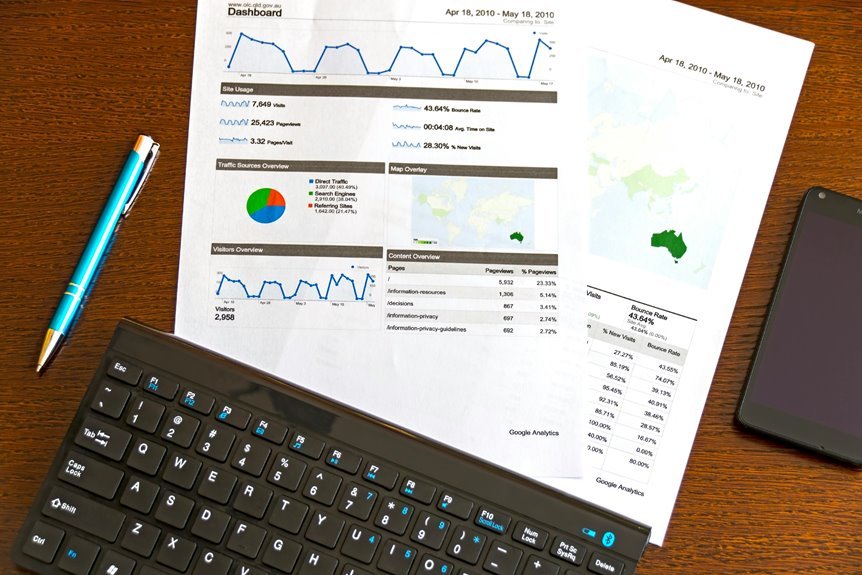
Financial Performance Dashboard: 8449861927, 8453023586, 8455203526, 8458362040, 8472578339, 8474911100
The Financial Performance Dashboard is a critical instrument for organizations aiming to enhance their decision-making processes. By providing real-time analytics and customizable metrics, it allows stakeholders to visualize their financial health effectively. The dashboard’s interactive features promote user engagement, while its continuous updates ensure accuracy. However, understanding the intricacies behind its design and implementation can reveal deeper insights into optimizing performance and strategic planning. What elements truly make a dashboard effective in today’s fast-paced financial landscape?
Importance of Financial Performance Dashboards
The significance of financial performance dashboards lies in their ability to synthesize complex data into actionable insights.
Employing effective data visualization techniques, these dashboards transform performance measurement metrics into easily digestible formats.
This clarity enables stakeholders to make informed decisions, fostering a sense of autonomy and control over financial outcomes.
Ultimately, dashboards serve as critical tools for optimizing organizational performance and strategic planning.
Key Components of Effective Dashboards
Effective dashboards are characterized by several key components that enhance their functionality and user experience.
Essential elements include intuitive data visualization techniques that simplify complex information, promoting clarity and comprehension.
Moreover, fostering user engagement through interactive features enables stakeholders to explore data dynamically, leading to informed decision-making.
Together, these components ensure that dashboards serve as powerful tools for analyzing financial performance efficiently.
Trends and Best Practices in Financial Dashboards
As organizations increasingly rely on data to drive financial decisions, emerging trends and best practices in financial dashboards reflect a growing emphasis on real-time analytics and user personalization.
Effective data visualization techniques enhance user engagement, allowing stakeholders to derive actionable insights swiftly. Integrating customized metrics and interactive elements fosters deeper understanding and responsiveness, ultimately empowering organizations to adapt to dynamic financial landscapes efficiently.
Conclusion
In conclusion, financial performance dashboards, such as those identified by numbers 8449861927 to 8474911100, are vital for organizations seeking to enhance decision-making and strategic planning. By leveraging real-time analytics and customizable metrics, these dashboards transform complex financial data into actionable insights. The increasing trend towards interactivity and continuous updates reflects a growing understanding of the necessity for immediate and accurate information in navigating today’s dynamic financial landscape. Ultimately, these tools empower organizations to optimize performance and drive sustainable growth.